
Tools of Change: Anthropology Researcher Uncovers Ancient Tech Tradition
New research led by Anthropology’s David Braun revealed how early humans crafted stone tools for nearly 300,000 years during dramatic environmental upheaval.


Tools of Change: Anthropology Researcher Uncovers Ancient Tech Tradition
New research led by Anthropology’s David Braun revealed how early humans crafted stone tools for nearly 300,000 years during dramatic environmental upheaval.

Student Research Shines at CCAS Showcase
Brooke Stallman, who works with CASHP's interdisciplinary Social Cognition Lab, joined students displaying their scholarly work at the 2024 CCAS Research Showcase.

PhD candidate Courtney Sexton explores a dog's facial markings and how expressive they appear when communicating with humans.

New Study Sheds Light on Early Human Hair Evolution
CASHP researchers examined the factors driving hair variation in a wild population of lemurs known as Indriidae. Learn about their published findings.

Jurassic Bark: Do Dogs Hold Hints to Early Language?
PhD candidate Courtney Sexton is studying our four-legged friends to determine if puppy dog eyes and raised brows reflect a ‘ruff’ draft of human communication.

Anthropology Professor Elected to National Academy of Sciences
Chet Sherwood, a biological anthropologist investigating brain evolution in primates and other mammals, was recognized for his achievements in original research.
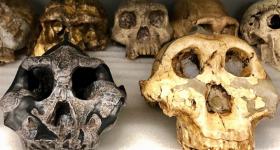
Changing Landscapes, Changing Diets: How Fossilized Teeth Reveal Dietary Shifts
Using fossilized teeth uncovered in Ethiopia, a team led by CASHP postdoctoral researcher Enquye Negash...
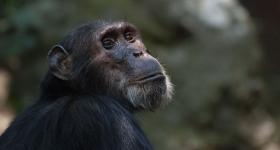
For Chimpanzees, Salt and Pepper Hair Not a Marker of Old Age
A new study from CASHP's Primate Genomics Laboratory finds there is significant...
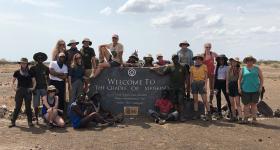
NSF Grants Expand Koobi Fora's Reach
Grants totaling $1.2 million from the National Science Foundation will broaden the research and...
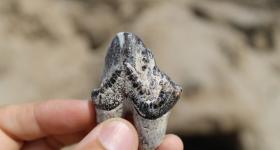
Changes in Human Diet Shed Light on Human Evolution
A study led by David Patterson, PhD ‘16, finds a dietary shift about 1.65 million years ago when the...
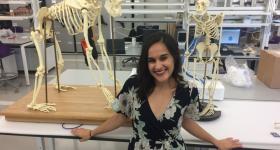
Research findings by Human Paleobiology doctoral student Eve Boyle challenge the widely accepted...

Lemur Lessons Lead Luther Rice Fellows
In Brenda Bradley’s anthropology lab, two Luther Rice Undergraduate Research Fellows are examining...
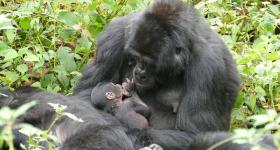
Great Ape Weaning Study Could Be Transformative
Associate Professor Shannon McFarlin will lead the anatomical component of a collaborative grant at...

Researchers Discover Early Evidence Linked to Emergence of Modern Humans
The findings, published by lead author and anthropology professor Alison Brooks and an international...

Origin of Human Genus May Have Occurred by Chance
A GW researcher’s paper challenges the claim that the genus Homo originated in response to...

Bonobos May Resemble Humans More Than You Think
A GW researcher examined a great ape species’ muscles and found they are more closely related to humans...

Locating Lemurs: Facial Recognition Tech Tracks Endangered Species
The same facial recognition technology used to catch criminals can now track an endangered species —...